
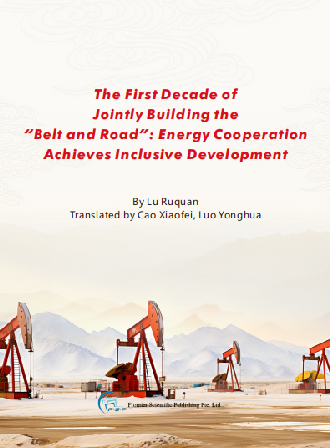
The First Decade of Jointly Building the “Belt and Road”: Energy Cooperation Achieves Inclusive
Development|By Lu Ruquan; Translated by Cao Xiaofei, Luo Yonghua
--Frontier Scientific Publishing Pte. Ltd. 2025.11. ISBN: 979-8-9591-3749-6
Ⅰ.①The First Decade of Jointly... Ⅱ. ①Cao Xiaofei... Ⅲ. ①Chapter One... ②Chapter Two... ③Chapter
Three... ④Chapter Four...
Title: The First Decade of Jointly Building the “Belt and Road”: Energy Cooperation Achieves Inclusive
Development
Publication: Frontier Scientific Publishing Pte. Ltd.
Address: 195 PEARL’S HILL TERRACE, #03-50K, SINGAPORE
Postal code: 168976
Format: 188mm×265mm 1/16
Print: 20
Number of words: 200000 words
Edition: 2025.11. First edition
Printing: 2025.11. For the first time
ISBN: 979-8-9591-3749-6
List Price: US $ 68.00
Chapter One Review and Outlook of Energy Cooperation under the Belt and Road Initiative ········ 1
Achievements of Oil and Gas Cooperation under the Belt and Road Initiative ······················ 2
Experience and Insights from Oil and Gas Cooperation under the Belt and Road Initiative ····· 6
Current Landscape of Oil and Gas Cooperation under the Belt and Road Initiative ············· 10
Chapter Two Inclusive Development in Belt and Road Energy Cooperation ····························· 17
Inclusive Realism: An International Relations Interpretation of the BRI····························18
The BRI: A Path to Inclusive Economic Globalization ··················································· 21
Five Key Shifts for High-Quality Belt and Road Cooperation ·········································· 24
Is China’s Promotion of the Belt and Road Initiative a Subversion of the Existing International
Order? ··············································································································· 28
Ten Golden Rules for Achieving Inclusive Development in Belt and Road Energy Cooperation30
New Positioning for Jointly Building the “Belt and Road”: Are Business Leaders Ready? ······ 41
What important signals were released at the third “Belt and Road” construction symposium? 43
A Decade of the Belt and Road: The “Patient Capital” of Chinese Enterprises···················· 49
Cooperative Operation is the True Formula ································································ 49
The “Fine Brushwork” of the Belt and Road: The Key Is to Manage These Six Categories of
Security Risks······································································································ 53
Chapter Three Energy Cooperation under the “Belt and Road Initiative” within the Dual
Circulation Development Paradigm ·················································································58
The Connotations and Characteristics of the Dual Circulation Development Paradigm ········· 60
China’s Oil and Gas Sector Has a Strong Foundation for Participating in Dual Circulation ····62
Analysis of the Synergy Between the “Dual Circulation” Strategy and the Belt and Road
Initiative ·············································································································64
Detailed Explanation of the Synergy Mechanism between the “Dual Circulation” Strategy and
the Belt and Road Initiative at the National and Energy Industry Levels····························88
Recommendations for Adjusting the Internationalization Strategy of China’s Energy
Enterprises under the Coordination of the “Dual Circulation” Strategy and the Belt and Road
Initiative ·············································································································93
Chapter Four New Domains in Jointly Building the “Belt and Road” — The “Ice Silk Road” ······· 97
Current Status of Arctic Development and Governance ················································· 99
Arctic Policies of China and Russia ········································································· 100
The Concept and Development of the “Ice Silk Road” ··················································103
Oil and Gas Exploration and Development along the “Ice Silk Road” ······························ 105
Oil and Gas Transportation along the “Ice Silk Road” ················································· 115
Relevant Policy Recommendations and Considerations················································ 122
Chapter Five Observations and Reflections on the Current Security Situation of Oil and Gas
Pipelines along the “Belt and Road” ···············································································126
The Connotation of Cross-border Oil and Gas Pipeline Security ·····································127
Basic Situation and Security Situation of Global Cross-border Oil and Gas Channels··········132
Analysis of the Security Situation of Belt and Road Cross-Border Oil and Gas Pipelines······ 138
Key Takeaways··································································································· 142
Chapter Six How to Counter the Stigmatization Faced by the Belt and Road Initiative ·············· 144
The Emergence and Evolution of the “Chinese Debt Trap” Narrative in the BRI················146
General Assessment and Case Analysis of the “Debt Trap” ············································151
Deep Causes Behind the “Debt Trap” Narrative ························································· 158
Reflections and Recommendations on Responding to the “China Debt-Trap Diplomacy” Narrative ···········································································································165
Appendix High-Level Dialogue on the 10th Anniversary of the Belt and Road Initiative (BRI)
Energy Cooperation (July 18, 2023)··············································································· 169
Postscript················································································································ 197
References··············································································································· 204
Achievements of Oil and Gas Cooperation under the Belt and Road Initiative ······················ 2
Experience and Insights from Oil and Gas Cooperation under the Belt and Road Initiative ····· 6
Current Landscape of Oil and Gas Cooperation under the Belt and Road Initiative ············· 10
Chapter Two Inclusive Development in Belt and Road Energy Cooperation ····························· 17
Inclusive Realism: An International Relations Interpretation of the BRI····························18
The BRI: A Path to Inclusive Economic Globalization ··················································· 21
Five Key Shifts for High-Quality Belt and Road Cooperation ·········································· 24
Is China’s Promotion of the Belt and Road Initiative a Subversion of the Existing International
Order? ··············································································································· 28
Ten Golden Rules for Achieving Inclusive Development in Belt and Road Energy Cooperation30
New Positioning for Jointly Building the “Belt and Road”: Are Business Leaders Ready? ······ 41
What important signals were released at the third “Belt and Road” construction symposium? 43
A Decade of the Belt and Road: The “Patient Capital” of Chinese Enterprises···················· 49
Cooperative Operation is the True Formula ································································ 49
The “Fine Brushwork” of the Belt and Road: The Key Is to Manage These Six Categories of
Security Risks······································································································ 53
Chapter Three Energy Cooperation under the “Belt and Road Initiative” within the Dual
Circulation Development Paradigm ·················································································58
The Connotations and Characteristics of the Dual Circulation Development Paradigm ········· 60
China’s Oil and Gas Sector Has a Strong Foundation for Participating in Dual Circulation ····62
Analysis of the Synergy Between the “Dual Circulation” Strategy and the Belt and Road
Initiative ·············································································································64
Detailed Explanation of the Synergy Mechanism between the “Dual Circulation” Strategy and
the Belt and Road Initiative at the National and Energy Industry Levels····························88
Recommendations for Adjusting the Internationalization Strategy of China’s Energy
Enterprises under the Coordination of the “Dual Circulation” Strategy and the Belt and Road
Initiative ·············································································································93
Chapter Four New Domains in Jointly Building the “Belt and Road” — The “Ice Silk Road” ······· 97
Current Status of Arctic Development and Governance ················································· 99
Arctic Policies of China and Russia ········································································· 100
The Concept and Development of the “Ice Silk Road” ··················································103
Oil and Gas Exploration and Development along the “Ice Silk Road” ······························ 105
Oil and Gas Transportation along the “Ice Silk Road” ················································· 115
Relevant Policy Recommendations and Considerations················································ 122
Chapter Five Observations and Reflections on the Current Security Situation of Oil and Gas
Pipelines along the “Belt and Road” ···············································································126
The Connotation of Cross-border Oil and Gas Pipeline Security ·····································127
Basic Situation and Security Situation of Global Cross-border Oil and Gas Channels··········132
Analysis of the Security Situation of Belt and Road Cross-Border Oil and Gas Pipelines······ 138
Key Takeaways··································································································· 142
Chapter Six How to Counter the Stigmatization Faced by the Belt and Road Initiative ·············· 144
The Emergence and Evolution of the “Chinese Debt Trap” Narrative in the BRI················146
General Assessment and Case Analysis of the “Debt Trap” ············································151
Deep Causes Behind the “Debt Trap” Narrative ························································· 158
Reflections and Recommendations on Responding to the “China Debt-Trap Diplomacy” Narrative ···········································································································165
Appendix High-Level Dialogue on the 10th Anniversary of the Belt and Road Initiative (BRI)
Energy Cooperation (July 18, 2023)··············································································· 169
Postscript················································································································ 197
References··············································································································· 204
Cao Xiaofei, born in Yongxing, Hunan in 1980, is a Ph.D., professor, and master’s supervisor at
Renmin University of China. He is also the Vice Dean of the School of Marxism at Guangdong University
of Petrochemical Technology, a target of the “Thousand and Ten Talents Project” in Guangdong Province, and the head of the “Ideological and Political Course Master Studio” in Maoming City. Mainly engaged in
research on national security and international issues, has led more than 10 provincial and ministerial level projects such as the National Social Science Fund and the Ministry of Education Social Science Fund, and has published over 40 papers in journals such as “Introduction to Ideological and Theoretical Education”, “South Asian Studies Quarterly”, and “Southeast Asia Vertical and Horizontal”. Received 2 second prizes and 3 third prizes for provincial-level teaching and research achievements, 2 second prizes for municipal level teaching and research achievements, and 2 first prizes for school level teaching and research achievements.
Luo Yonghua, male, born in 1979 in Yongxing, Hunan, holds a PhD and is a professor. He is a member of the Guangdong Provincial Thousand and Ten Project and a member of the Teaching Guidance Committee for Logistics Management and Engineering majors in undergraduate universities in Guangdong Province. His main research areas include regional economy, labor economy, and port logistics.He started teaching at Guangdong University of Petrochemical Technology in August 2005 and currently serves as the Dean of the School of Economics and Management. He presided over or participated in more than 20 national, provincial and ministerial projects, presided over and completed 7 horizontal projects of enterprises and institutions, and published 50 papers in important journals such as Financial Research, among which 2 were reprinted in full by Renmin University of China. Edited or co edited 3 textbooks, published 1 book, and wrote multiple decision-making consulting reports that received approval from the main leaders of the Maoming Municipal Party Committee and Municipal Government. Won one second prize in the Education and Teaching Achievement Award of the China Petroleum Education Society; Won 2 first prizes, 1 second prize, and 1 third prize for excellent papers at the Guangdong Provincial Social Science Academic Annual Conference, 2 first prizes for good journal works in Chongqing, and 2 second prizes and 2 third prizes for excellent achievements in philosophy and social sciences in Maoming City.
Worldcat: https://www.worldcat.org/
Ebsco: https://research.ebsco.com/
Crossref: 10.32629/9798959137496