
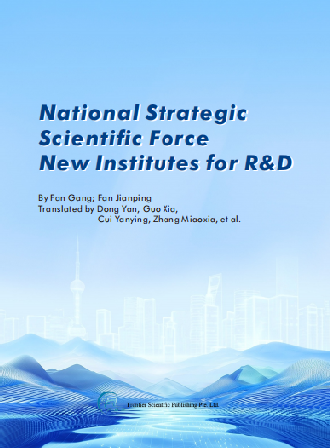
National Strategic Scientific Force New Institutes for R&D | Edited by Fan Gang, Fan Jianping;
Translated by Dong Yan, Guo Xia, Cui Yanying, Zhang Miaoxia, et al.
--Frontier Scientific Publishing Pte. Ltd. 2025.10.
ISBN: 979-8-9591-3715-1
Ⅰ. ① National …Ⅱ. ① Fan Gang…Ⅲ. ① Chapter One Introduction ② Chapter Two
Transformation ... ③ Chapter Three Opportunities ...
Title: National Strategic Scientific Force New Institutes for R&D
Publication: Frontier Scientific Publishing Pte. Ltd.
Address: 195 PEARL’S HILL TERRACE, #03-50K, SINGAPORE
Postal code: 168976
Format: 185mm×260mm 1/16
Number of words: 200000 words
Edition: 2025.10. First edition
Printing: 2025.10. For the first time
ISBN: 979-8-9591-3715-1
List Price: US$ 68.00
Chapter One Introduction............................................................................................................................. 1
1.1 Innovation as the Primary Driving Force of Development..........................................................1
1.1.1 Science and Technology Innovation as the Engine of High-Quality Economic Growth2
1.1.2 Innovation-driven Development Becoming a National Strategy ....................................6
1.2 Institutes for R& D: a New Force for Innovation-Driven Development.................................. 10
1.2.1 Important Scientific and Technological Support for Developed Countries..................10
1.2.2 China’s National Strategic Scientific and Technological Forces....................................12
1.3 Three Major Challenges in Commercialization of Research Outcomes Facing the Institutes
for R&D................................................................................................................................................. 16
1.3.1 Challenges in Minimizing Administrative Intervention..................................................17
1.3.2 Operational Models Constrain Development...................................................................22
1.3.3 Challenges in Aligning Research with Market Needs..................................................... 26
Chapter Two Transformation of China’s Institutes for R&D: Paradigm Shifts in Scientific Research30
2.1 Pressing Necessity for Reform of Institutes for R&D.................................................................30
2.1.1 The Role of Sci-tech Revolution and Industrial Transformation.................................. 30
2.1.2 Market and Enterprise-Driven Demand...........................................................................32
2.1.3 Comprehensive Reform of the Science and Technology System....................................39
2.2 The New Institutes for R&D: Pioneering the Reform of Scientific Institutions......................40
2.2.1 University-Local Government Partnership: Research Institute of Tsinghua University
in Shenzhen................................................................................................................................... 40
2.2.2 University-Led Model: Zhejiang University Institute of Innovative Technology........ 43
2.2.3 Government-Led Model: The South China Center for Innovative Pharmaceuticals..45
2.2.4 Government-assisted Private Enterprise Initiative: Shenzhen Kuang-Chi Institute of
Technology.................................................................................................................................... 47
2.3 The New Institutes for R&D: from Pilot Projects to High-quality Development................... 50
2.3.1 Pilot Phase in Developed Regions: Building the New Institutes for R&D (from 0 to 1)50
2.3.2 National large-scale Support Phase: From Initial Formation to Rapid Expansion.....54
2.3.3 High-Quality Development Stage of National the New Institutes for R&D: From
Large to Strong .............................................................................................................................59
2.4 Specific Connotation and Construction Models of the New Institutes for R&D.....................66
2.4.1 Connotation and Characteristics of the New Institutes for R&D.................................. 66
2.4.2 Construction Experience and Models of the New Institutes for R&D.......................... 72
Chapter Three Opportunities and Implementations of the New Institutes for R&D: A Case Study of
the Shenzhen Institutes of Advanced Technology (SIAT)........................................................................77
3.1 Development Overview of SIAT: The “Four-Unlike” Research Institution............................77
3.1.1 Shenzhen’s First “National Team” in Innovation............................................................78
3.1.2 Building a World-Class Industrial Research Institute ....................................................80
3.1.3 Establishing Institutes for “Today, Tomorrow, and Beyond”....................................... 81
3.1.4 Remarkable Achievements in Institute Development..................................................... 86
3.2 Development of SIAT: Growing in Symbiosis with Shenzhen.................................................. 93
3.2.1 Building SIAT from Scratch: Fueling Shenzhen’s Transition to an Innovation Hub. 93
3.2.2 Serving the Layout of Strategic Emerging Industries and Promoting the Development
of SIAT...........................................................................................................................................96
3.2.3 Upgrading to a “Four-in-One” Model: Accelerating Shenzhen’s Global Sci-Tech
Innovation Hub Development................................................................................................... 100
3.2.4 Addressing the Weakness in Basic Research: Preparation for the Establishment of
Shenzhen University of Advanced Technology........................................................................103
3.3 Construction of SIAT: Tripartite Co-construction.................................................................. 106
3.3.1 The Establishment of Shenzhen Institute of Advanced Technology (SIAT) .............107
3.3. 2 Comprehensive Policy ......................................................................................................108
Support Provided by Shenzhen Governments at All Levels..................................................108
3.3.3 Multifaceted Support from CAS Encompassing Strategic Development Guidance,
Allocation of Research Resources and Staffing .......................................................................109
3.3.4 Hong Kong’s Contribution to International Innovation Elements..............................110
3.3.5 Integrating Other Innovative Resources Such as Enterprises and Associations........111
3.4 Distinctive Features of SIAT: “Four-in-One” Micro-Innovation Ecosystem........................ 112
3.4.1 The “Four-in-One” Integration of “Research-Education-Industry-Capital”............ 113
3.4.2 Six Functions Creating an Innovative Ecosystem..........................................................114
Chapter Four Construction Paradigm of the New Institutes for R&D: Eight Strategic Lessons from
SIAT............................................................................................................................................................. 118
4.1 Framework of Organization and Operation: Council Governance System.......................... 119
4.1.1 Organizational Models of the New Institutes for R&D.................................................119
4.1.2 Council Governance System of the Shenzhen Institutes of Advanced Technology
(SIAT).......................................................................................................................................... 122
4.1.3 Market Demand-Oriented Organizational Structure ................................................... 124
4.2 Scientific Research Breakthroughs Model: A Scientific Research System Closely Aligned
with the Demands of the Sci-tech Industry ......................................................................................125
4.2.1 Research and Development Directions of the New Institutes for R&D.......................125
4.2.2 Demand-Driven Research Layout................................................................................... 127
4.2.3 Team-based Research Model Under the Centralized System...................................... 129
4.3 Pedagogical Model: Integration of Science with Education .................................................. 131
4.3.1 Integration of Science with Education: An Imperative Choice for Higher Education
Development................................................................................................................................131
4.3.2 Adhering to the Core Principle of “Integration of Research and Education” ........... 132
4.3.3 Pedagogical Innovation for Talent Cultivation..............................................................135
4.3.4 Building Shenzhen into a Future-Oriented Hub of Original Innovation....................144
4.4 Technology Transfer: An Innovative Model of ETS................................................................ 148
4.4.1 Technology Transfer in the New Institutes for R&D.................................................... 149
4.4.2 Unique “ETS” Model........................................................................................................ 150
4.4.3 Strong Incubation Capability ...........................................................................................157
4.4.4 High-Level Technology Transfer and Resource Sharing Platform............................. 159
4.4.5 Investment Fund Support System Covering the Entire Innovation Life Cycle ......... 161
4.5 Human Resources Management: Innovation-Driven Incentive Mechanisms....................... 163
4.5.1 Flexible Talent Management Mechanisms Required for the New Institutes for R&D163
4.5.2 Global Talent Recruitment for “High-potential Seeds” to Build a “Talent Forest” ..165
4.5.3 Distinctive Talent Management System..........................................................................166
4.5.4 Industrialization Projects Assessed at a Ratio of 1:1.5..................................................169
4.5.5 Strict Implementation of a Bottom-Line Elimination System......................................169
4.5.6 Actively Establishing a Competitive Compensation System........................................ 169
4.5.7 Half of Technology Transfer Revenue Awarded to Researchers.................................171
4.5.8 Comprehensive Talent Support System..........................................................................171
4.6 Project Management System: Classified Management............................................................ 171
4.6.1 Characteristics of Project Management in the New Institutes for R&D.....................172
4.6.2 Project Management Measures of SIAT.........................................................................173
4.6.3 Extensive International Cooperation and Exchange Activities....................................175
4.7 Financial Management Mechanism: Continuous Optimization to Enhance Motivation.....176
4.7.1 Characteristics of Financial Management in the New Institutes for R&D.................176
4.7.2 Multi-Channel Funding Model with Competitive Funding as the Mainstay ..............178
4.7.3 Continuous Optimization and Adjustment of Fund Management Methods.............. 179
4.7.4 Strengthening Asset Management and Security ............................................................ 179
4.8 Culture of the Institutes for R&D: Fair Competition and Sustained Vitality .......................180
4.8.1 Cultural Characteristics of the New Institutes for R&D.............................................. 180
4.8.2 Creating a Cultural Atmosphere Guided by “Centering on Core Missions, Serving the
Broader Vision, and Safeguarding Development” ..................................................................181
4.8.3 Integrated Development of Party Building and Operational Work............................ 182
Chapter Five Controversies and Challenges Facing Development of the New Institutes for R&D.. 184
5.1 Imperfect Delimitation and Management of the New Institutes for R&D.............................184
5.1.1 Obscure Institutional Identity and Status...................................................................... 185
5.1.2 Lack of Targeted Management Approaches and Support Policies............................. 187
5.1.3 Lack of Sustainability and Balanced Development....................................................... 188
5.2 Incomplete Internal Governance and Management.................................................................190
5.2.1 Insufficient Functioning of the Council Governance System....................................... 190
5.2.2 Lack of Clear Management and Coordination Authorities..........................................191
5.3 Necessity for Improvement Upon Innovation Capability ........................................................ 192
5.3.1 Insufficient Market Orientation in Scientific Research and Innovation.....................192
5.3.2 Barriers to Interdisciplinary and Cross-System Collaboration................................... 193
5.3.3 Persistent Blockages in Industry-Academia-Research Collaboration Channels....... 194
5.3.4 Absence of Intellectual Property Strategies....................................................................195
5.4 Necessity for the Optimization of the Institutional Mechanisms............................................ 196
5.4.1 Misalignment Between Evaluation Systems and Industrial Needs.............................. 196
5.4.2 Insufficient Private Capital Engagement (participation)..............................................197
5.4.3 Imperfect Mechanisms for Talent Recruitment and Cultivation.................................200
Chapter Six Future Trends of the New Institutes for R&D...................................................................202
6.1 Experiences from Abroad: Characteristics and Development ..............................................202
of Foreign Research Institutions.......................................................................................................202
6.1.1 Models and Characteristics of Foreign Research Institutions..................................... 202
6.1.2 Development Trends of Foreign Research Institutions.................................................210
6.1.3 Experience from International Research Institutions...................................................215
6.2 Clarifying Goals and Positioning ................................................................................................217
6.2.1 Becoming a Source of Scientific and Technological Innovation...................................217
6.2.2 Establishing Platforms for Public Welfare and Public Technical Service ..................223
6.2.3 Building Platforms for the Transformation and Commercialization of Scientific and
Technological Achievements..................................................................................................... 225
6.2.4 Establishing Platforms for Tackling Key “Choke-point” Technology Breakthroughs227
6.3 Exploring Autonomous Statutory Institutions..........................................................................230
6.3.1 Establishing an Efficient Board Management Model ................................................... 230
6.3.2 Possessing Greater Autonomy over Human Resources, Finances and Material....... 235
6.4 Building Multi-Faceted Science-Education Integration institutions...................................... 238
6.4.1 Promoting Government-Industry-Academia-Research Collaboration in Technology
Transfer ....................................................................................................................................... 238
6.4.2 Developing an Integrated ETS and STE Model for Education-Science Integration. 241
6.5 Establishing an International Institution with Global Competitiveness................................ 243
6.5.1 Building an International Talent Pool............................................................................ 243
6.5.2 Exploring Globalization Development Models.............................................................. 246
Chapter Seven Suggestions to Promote Development of the New Institutes for R&D....................... 248
7.1 Improving Delimitation and Management of the New Institutes for R&D........................... 248
7.1.1 Exploring the Independent Legal Entities of the New Institutes for R&D................. 249
7.1.2 Strengthening Overall Management of the New Institutes for R&D.......................... 250
7.1.3 Increasing Support for the New Institutes for R&D..................................................... 251
7.2 Optimizing governance and management Mechanisms of the New Institutes for R&D......252
7.2.1 Accelerating the Promotion of SIAT’s Council Management System.........................252
7.2.2 Clarifying the Boundaries between Government, Industry, Universities and Research254
7.3 Strengthening Innovation Capacity of the New Institutes for R&D.......................................255
7.3.1 Serving Local Economic and Social Development.........................................................255
7.3.2 Improving Cutting-Edge Scientific Research.................................................................257
7.3.3 Strengthening Industry-University-Research and International Cooperation.......... 258
7.4 Innovating Institutions and Mechanisms of the New Institutes for R&D..............................259
7.4.1 Establishing an Evaluation System for the New Institutes for R&D...........................259
7.4.2 Improving the Incentive Mechanism for the New Institutes for R&D........................261
7.4.3 Establishing Diversified Channels of Fund Raising ...................................................... 261
7.4.4 Developing the Paradigm of Integration of Industry, Research and Education........ 262
1.1 Innovation as the Primary Driving Force of Development..........................................................1
1.1.1 Science and Technology Innovation as the Engine of High-Quality Economic Growth2
1.1.2 Innovation-driven Development Becoming a National Strategy ....................................6
1.2 Institutes for R& D: a New Force for Innovation-Driven Development.................................. 10
1.2.1 Important Scientific and Technological Support for Developed Countries..................10
1.2.2 China’s National Strategic Scientific and Technological Forces....................................12
1.3 Three Major Challenges in Commercialization of Research Outcomes Facing the Institutes
for R&D................................................................................................................................................. 16
1.3.1 Challenges in Minimizing Administrative Intervention..................................................17
1.3.2 Operational Models Constrain Development...................................................................22
1.3.3 Challenges in Aligning Research with Market Needs..................................................... 26
Chapter Two Transformation of China’s Institutes for R&D: Paradigm Shifts in Scientific Research30
2.1 Pressing Necessity for Reform of Institutes for R&D.................................................................30
2.1.1 The Role of Sci-tech Revolution and Industrial Transformation.................................. 30
2.1.2 Market and Enterprise-Driven Demand...........................................................................32
2.1.3 Comprehensive Reform of the Science and Technology System....................................39
2.2 The New Institutes for R&D: Pioneering the Reform of Scientific Institutions......................40
2.2.1 University-Local Government Partnership: Research Institute of Tsinghua University
in Shenzhen................................................................................................................................... 40
2.2.2 University-Led Model: Zhejiang University Institute of Innovative Technology........ 43
2.2.3 Government-Led Model: The South China Center for Innovative Pharmaceuticals..45
2.2.4 Government-assisted Private Enterprise Initiative: Shenzhen Kuang-Chi Institute of
Technology.................................................................................................................................... 47
2.3 The New Institutes for R&D: from Pilot Projects to High-quality Development................... 50
2.3.1 Pilot Phase in Developed Regions: Building the New Institutes for R&D (from 0 to 1)50
2.3.2 National large-scale Support Phase: From Initial Formation to Rapid Expansion.....54
2.3.3 High-Quality Development Stage of National the New Institutes for R&D: From
Large to Strong .............................................................................................................................59
2.4 Specific Connotation and Construction Models of the New Institutes for R&D.....................66
2.4.1 Connotation and Characteristics of the New Institutes for R&D.................................. 66
2.4.2 Construction Experience and Models of the New Institutes for R&D.......................... 72
Chapter Three Opportunities and Implementations of the New Institutes for R&D: A Case Study of
the Shenzhen Institutes of Advanced Technology (SIAT)........................................................................77
3.1 Development Overview of SIAT: The “Four-Unlike” Research Institution............................77
3.1.1 Shenzhen’s First “National Team” in Innovation............................................................78
3.1.2 Building a World-Class Industrial Research Institute ....................................................80
3.1.3 Establishing Institutes for “Today, Tomorrow, and Beyond”....................................... 81
3.1.4 Remarkable Achievements in Institute Development..................................................... 86
3.2 Development of SIAT: Growing in Symbiosis with Shenzhen.................................................. 93
3.2.1 Building SIAT from Scratch: Fueling Shenzhen’s Transition to an Innovation Hub. 93
3.2.2 Serving the Layout of Strategic Emerging Industries and Promoting the Development
of SIAT...........................................................................................................................................96
3.2.3 Upgrading to a “Four-in-One” Model: Accelerating Shenzhen’s Global Sci-Tech
Innovation Hub Development................................................................................................... 100
3.2.4 Addressing the Weakness in Basic Research: Preparation for the Establishment of
Shenzhen University of Advanced Technology........................................................................103
3.3 Construction of SIAT: Tripartite Co-construction.................................................................. 106
3.3.1 The Establishment of Shenzhen Institute of Advanced Technology (SIAT) .............107
3.3. 2 Comprehensive Policy ......................................................................................................108
Support Provided by Shenzhen Governments at All Levels..................................................108
3.3.3 Multifaceted Support from CAS Encompassing Strategic Development Guidance,
Allocation of Research Resources and Staffing .......................................................................109
3.3.4 Hong Kong’s Contribution to International Innovation Elements..............................110
3.3.5 Integrating Other Innovative Resources Such as Enterprises and Associations........111
3.4 Distinctive Features of SIAT: “Four-in-One” Micro-Innovation Ecosystem........................ 112
3.4.1 The “Four-in-One” Integration of “Research-Education-Industry-Capital”............ 113
3.4.2 Six Functions Creating an Innovative Ecosystem..........................................................114
Chapter Four Construction Paradigm of the New Institutes for R&D: Eight Strategic Lessons from
SIAT............................................................................................................................................................. 118
4.1 Framework of Organization and Operation: Council Governance System.......................... 119
4.1.1 Organizational Models of the New Institutes for R&D.................................................119
4.1.2 Council Governance System of the Shenzhen Institutes of Advanced Technology
(SIAT).......................................................................................................................................... 122
4.1.3 Market Demand-Oriented Organizational Structure ................................................... 124
4.2 Scientific Research Breakthroughs Model: A Scientific Research System Closely Aligned
with the Demands of the Sci-tech Industry ......................................................................................125
4.2.1 Research and Development Directions of the New Institutes for R&D.......................125
4.2.2 Demand-Driven Research Layout................................................................................... 127
4.2.3 Team-based Research Model Under the Centralized System...................................... 129
4.3 Pedagogical Model: Integration of Science with Education .................................................. 131
4.3.1 Integration of Science with Education: An Imperative Choice for Higher Education
Development................................................................................................................................131
4.3.2 Adhering to the Core Principle of “Integration of Research and Education” ........... 132
4.3.3 Pedagogical Innovation for Talent Cultivation..............................................................135
4.3.4 Building Shenzhen into a Future-Oriented Hub of Original Innovation....................144
4.4 Technology Transfer: An Innovative Model of ETS................................................................ 148
4.4.1 Technology Transfer in the New Institutes for R&D.................................................... 149
4.4.2 Unique “ETS” Model........................................................................................................ 150
4.4.3 Strong Incubation Capability ...........................................................................................157
4.4.4 High-Level Technology Transfer and Resource Sharing Platform............................. 159
4.4.5 Investment Fund Support System Covering the Entire Innovation Life Cycle ......... 161
4.5 Human Resources Management: Innovation-Driven Incentive Mechanisms....................... 163
4.5.1 Flexible Talent Management Mechanisms Required for the New Institutes for R&D163
4.5.2 Global Talent Recruitment for “High-potential Seeds” to Build a “Talent Forest” ..165
4.5.3 Distinctive Talent Management System..........................................................................166
4.5.4 Industrialization Projects Assessed at a Ratio of 1:1.5..................................................169
4.5.5 Strict Implementation of a Bottom-Line Elimination System......................................169
4.5.6 Actively Establishing a Competitive Compensation System........................................ 169
4.5.7 Half of Technology Transfer Revenue Awarded to Researchers.................................171
4.5.8 Comprehensive Talent Support System..........................................................................171
4.6 Project Management System: Classified Management............................................................ 171
4.6.1 Characteristics of Project Management in the New Institutes for R&D.....................172
4.6.2 Project Management Measures of SIAT.........................................................................173
4.6.3 Extensive International Cooperation and Exchange Activities....................................175
4.7 Financial Management Mechanism: Continuous Optimization to Enhance Motivation.....176
4.7.1 Characteristics of Financial Management in the New Institutes for R&D.................176
4.7.2 Multi-Channel Funding Model with Competitive Funding as the Mainstay ..............178
4.7.3 Continuous Optimization and Adjustment of Fund Management Methods.............. 179
4.7.4 Strengthening Asset Management and Security ............................................................ 179
4.8 Culture of the Institutes for R&D: Fair Competition and Sustained Vitality .......................180
4.8.1 Cultural Characteristics of the New Institutes for R&D.............................................. 180
4.8.2 Creating a Cultural Atmosphere Guided by “Centering on Core Missions, Serving the
Broader Vision, and Safeguarding Development” ..................................................................181
4.8.3 Integrated Development of Party Building and Operational Work............................ 182
Chapter Five Controversies and Challenges Facing Development of the New Institutes for R&D.. 184
5.1 Imperfect Delimitation and Management of the New Institutes for R&D.............................184
5.1.1 Obscure Institutional Identity and Status...................................................................... 185
5.1.2 Lack of Targeted Management Approaches and Support Policies............................. 187
5.1.3 Lack of Sustainability and Balanced Development....................................................... 188
5.2 Incomplete Internal Governance and Management.................................................................190
5.2.1 Insufficient Functioning of the Council Governance System....................................... 190
5.2.2 Lack of Clear Management and Coordination Authorities..........................................191
5.3 Necessity for Improvement Upon Innovation Capability ........................................................ 192
5.3.1 Insufficient Market Orientation in Scientific Research and Innovation.....................192
5.3.2 Barriers to Interdisciplinary and Cross-System Collaboration................................... 193
5.3.3 Persistent Blockages in Industry-Academia-Research Collaboration Channels....... 194
5.3.4 Absence of Intellectual Property Strategies....................................................................195
5.4 Necessity for the Optimization of the Institutional Mechanisms............................................ 196
5.4.1 Misalignment Between Evaluation Systems and Industrial Needs.............................. 196
5.4.2 Insufficient Private Capital Engagement (participation)..............................................197
5.4.3 Imperfect Mechanisms for Talent Recruitment and Cultivation.................................200
Chapter Six Future Trends of the New Institutes for R&D...................................................................202
6.1 Experiences from Abroad: Characteristics and Development ..............................................202
of Foreign Research Institutions.......................................................................................................202
6.1.1 Models and Characteristics of Foreign Research Institutions..................................... 202
6.1.2 Development Trends of Foreign Research Institutions.................................................210
6.1.3 Experience from International Research Institutions...................................................215
6.2 Clarifying Goals and Positioning ................................................................................................217
6.2.1 Becoming a Source of Scientific and Technological Innovation...................................217
6.2.2 Establishing Platforms for Public Welfare and Public Technical Service ..................223
6.2.3 Building Platforms for the Transformation and Commercialization of Scientific and
Technological Achievements..................................................................................................... 225
6.2.4 Establishing Platforms for Tackling Key “Choke-point” Technology Breakthroughs227
6.3 Exploring Autonomous Statutory Institutions..........................................................................230
6.3.1 Establishing an Efficient Board Management Model ................................................... 230
6.3.2 Possessing Greater Autonomy over Human Resources, Finances and Material....... 235
6.4 Building Multi-Faceted Science-Education Integration institutions...................................... 238
6.4.1 Promoting Government-Industry-Academia-Research Collaboration in Technology
Transfer ....................................................................................................................................... 238
6.4.2 Developing an Integrated ETS and STE Model for Education-Science Integration. 241
6.5 Establishing an International Institution with Global Competitiveness................................ 243
6.5.1 Building an International Talent Pool............................................................................ 243
6.5.2 Exploring Globalization Development Models.............................................................. 246
Chapter Seven Suggestions to Promote Development of the New Institutes for R&D....................... 248
7.1 Improving Delimitation and Management of the New Institutes for R&D........................... 248
7.1.1 Exploring the Independent Legal Entities of the New Institutes for R&D................. 249
7.1.2 Strengthening Overall Management of the New Institutes for R&D.......................... 250
7.1.3 Increasing Support for the New Institutes for R&D..................................................... 251
7.2 Optimizing governance and management Mechanisms of the New Institutes for R&D......252
7.2.1 Accelerating the Promotion of SIAT’s Council Management System.........................252
7.2.2 Clarifying the Boundaries between Government, Industry, Universities and Research254
7.3 Strengthening Innovation Capacity of the New Institutes for R&D.......................................255
7.3.1 Serving Local Economic and Social Development.........................................................255
7.3.2 Improving Cutting-Edge Scientific Research.................................................................257
7.3.3 Strengthening Industry-University-Research and International Cooperation.......... 258
7.4 Innovating Institutions and Mechanisms of the New Institutes for R&D..............................259
7.4.1 Establishing an Evaluation System for the New Institutes for R&D...........................259
7.4.2 Improving the Incentive Mechanism for the New Institutes for R&D........................261
7.4.3 Establishing Diversified Channels of Fund Raising ...................................................... 261
7.4.4 Developing the Paradigm of Integration of Industry, Research and Education........ 262
Dong Yan is Professor of Applied Linguistics and Dean of the School of Foreign Languages at Taiyuan University of Science and Technology (TYUST). She holds a Ph.D. from Shanghai International Studies University and has conducted advanced research as a visiting scholar at both the University of Michigan (US) and Lancaster University (UK). Her research interest encompasses three primary research domains: (1) discourse analysis, (2) Teaching English as a Foreign Language (TEFL), and (3) applied linguistics, with particular expertise in cross-cultural communication. Professor Dong has authored 50+ peer-reviewed articles and an acclaimed monograph on academic discourse. As a dedicated translator, she has rendered 4 significant works bidirectionally between English and Chinese, focusing on enhancing cultural exchange and effectively communicating Chinese narratives to global audiences. She has co-developed 2 textbooks and directed 30+ national/provincial research projects. Her contributions have been recognized with 10+ provincial-level awards for excellence in teaching and research.
Guo Xia, a master’s degree holder from Xidian University, is now an associate professor at the School of Foreign Languages of Taiyuan University of Science and Technology. Her research centers on academic English and cognitive linguistics. She led one provincial first-class course and five provincial educational reform projects, was part of a team winning two provincial teaching awards, published one academic book, authored numerous papers, and co-translated a cultural book series.
Cui Yanying, who got her PhD from Shanxi University, is currently teaching at the School of Foreign Languages, TYUST. Her research focuses on Linguistics and Philosophy of Language. She has completed one provincial research project, and is now working on two more. She has participated in one National Social Science Fund of China (Major Program), and published two monographs and over a dozen academic papers.
Worldcat: https://www.worldcat.org/
Ebsco: https://research.ebsco.com/
Crossref: 10.32629/9798959137151